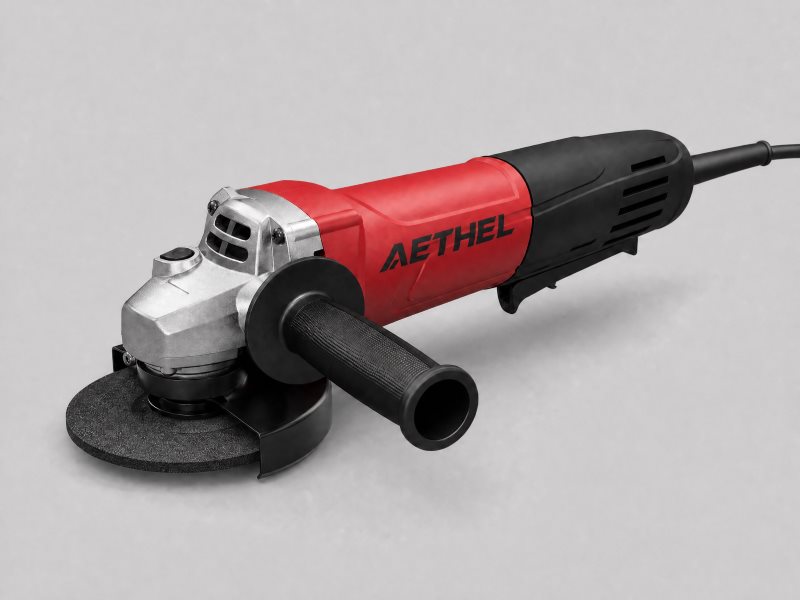
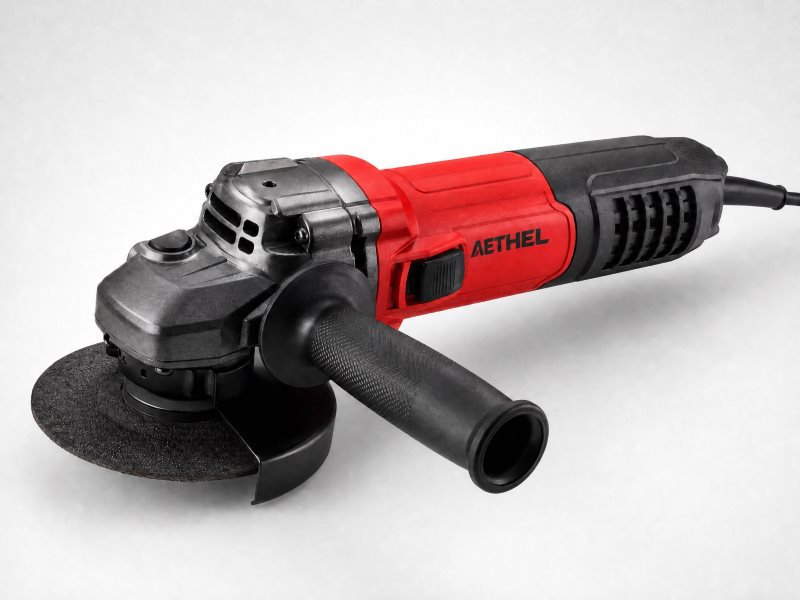
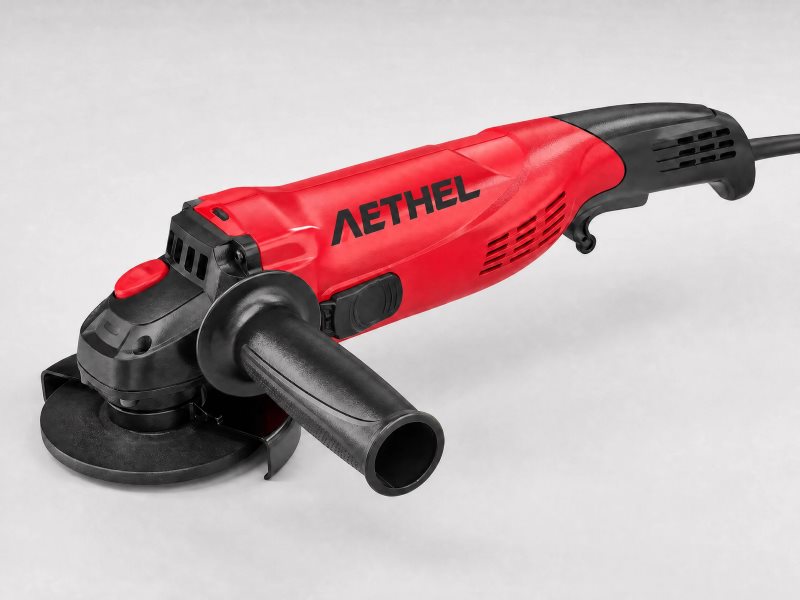
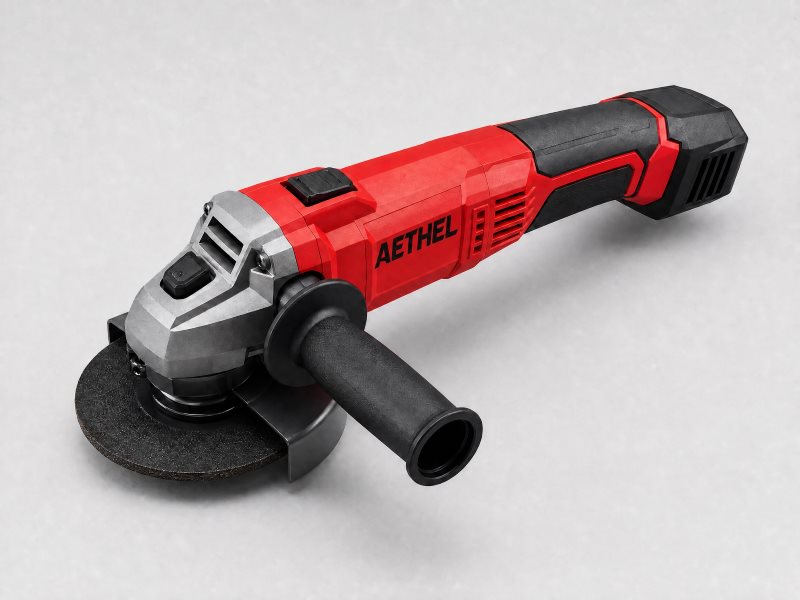
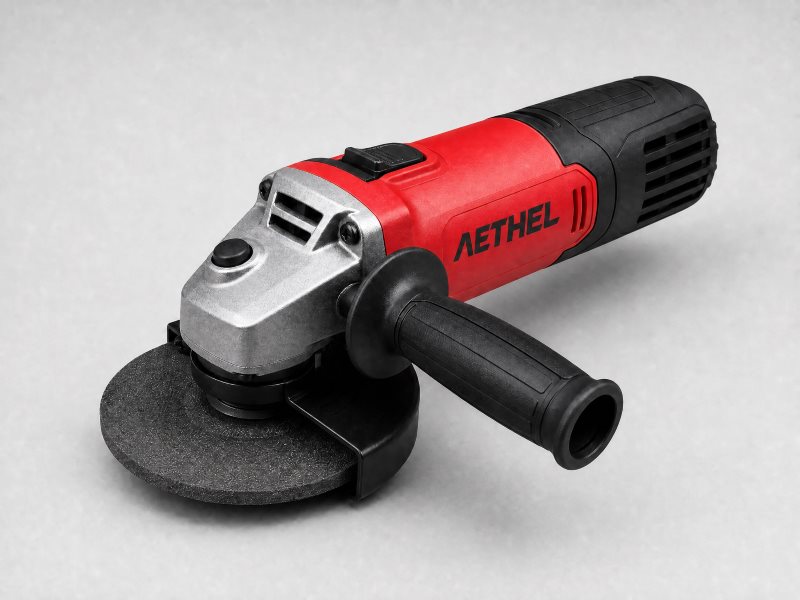
What the Number Means: Disc Diameter Explained
The number in "115mm" or "125mm" refers to the maximum disc (wheel) diameter the grinder accepts. It is not the motor size — two grinders with identical 850 W motors can take different disc sizes. The disc diameter directly determines maximum cutting depth: a 115mm disc cuts roughly 28–30 mm deep, while a 125mm disc cuts about 34–38 mm. For most metal cutting (rebar, pipe, sheet steel) both sizes work; the difference shows up in thicker material and larger surface work.
Cutting Depth: The Practical Difference
• 115mm disc — max cut depth ≈ 28–32 mm. Fine for sheet metal, thin profiles, tiles, most DIY tasks. • 125mm disc — max cut depth ≈ 34–41 mm. Better for pipe, angle iron, thicker plate and demolition trimming. Rule of thumb: if you frequently cut material thicker than 30 mm, the 125mm size gives noticeably more useful depth — roughly 25% more. If most cuts are thin material, 115mm is lighter and cheaper.
Power and Speed: What Actually Varies
Within the same model family, the 125mm version usually carries a slightly more powerful motor (for example 850 W vs 750 W) and spins a slightly lower no-load speed (about 11,000 rpm vs 12,000 rpm on 115mm) to manage the larger disc. In practice: • 750–850 W is the typical range for 115mm. • 850–1,100 W is typical for 125mm. • Heavy 125mm "industrial" grinders go up to 1,400 W+ for continuous cutting. For B2B buyers: compare the same spec sheet — power (W), no-load speed (RPM) and spindle thread (M14 is standard on most 115/125mm grinders) across candidate models.
Price, Weight and Disc Availability
• Disc cost: 125mm discs are slightly more expensive and, in some regions, 115mm discs are more widely stocked. In Europe and Asia both are common; 125mm is the dominant size in many EU markets. • Weight: 115mm grinders are typically 1.6–1.9 kg; 125mm are 1.8–2.2 kg. For overhead work, the lighter 115mm is easier on the operator. • Price: at factory-direct level, 115mm models are usually a few percent cheaper for equivalent power — meaningful only at container quantities.
Which Size for Which Customer (for Distributors)
If you are sourcing for resale, match the mix to your market: • Retail/DIY-heavy markets: 115mm sells more (lower price, lighter, adequate for home use). • Contractor-heavy markets: 125mm is the workhorse (deeper cuts, more power, standard on job sites). Many distributors carry both and use the 115mm as the entry price point and the 125mm as the professional tier. AETHEL supplies both sizes from the same factories with full CE/GS/UL/ETL certification on request.
Safety and Accessories to Check
• Guard and safety clutch: both sizes must ship with a guard; a safety clutch (anti-kickback) is a strong quality signal. • Spindle lock: one-hand disc changes are a practical selling point. • Dust protection: sealed bearings and a dust shield extend life in cutting work. • Discs: always check the grinder's max disc thickness (usually 1.6 mm for cutting discs) and never exceed the rated RPM stamped on the disc.
Buyer's Checklist: 115mm vs 125mm
1. Material thickness: ≤30 mm → 115mm is enough; >30 mm → prefer 125mm. 2. Work intensity: continuous contractor cutting → 125mm with 850 W+. 3. Market preference: check which size dominates your target country. 4. Budget: 115mm is the value entry; 125mm the professional standard. 5. Accessories: confirm M14 spindle and disc availability locally. 6. Certifications: CE/GS/UL/ETL per destination market.